
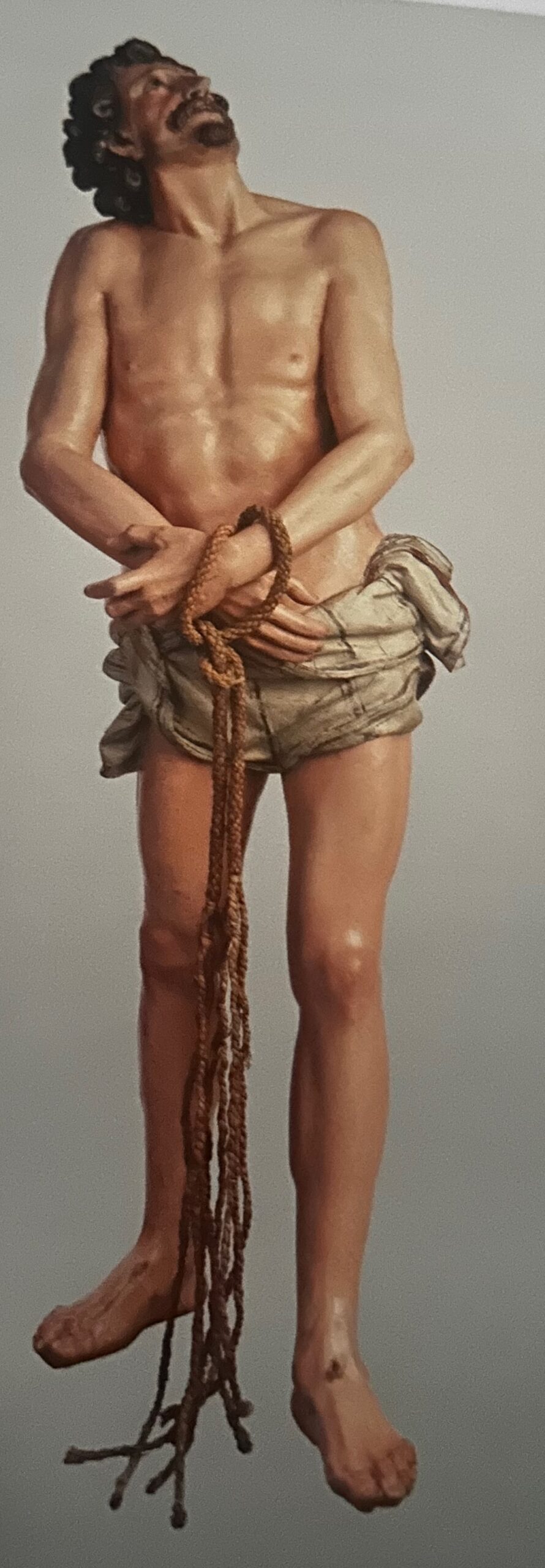
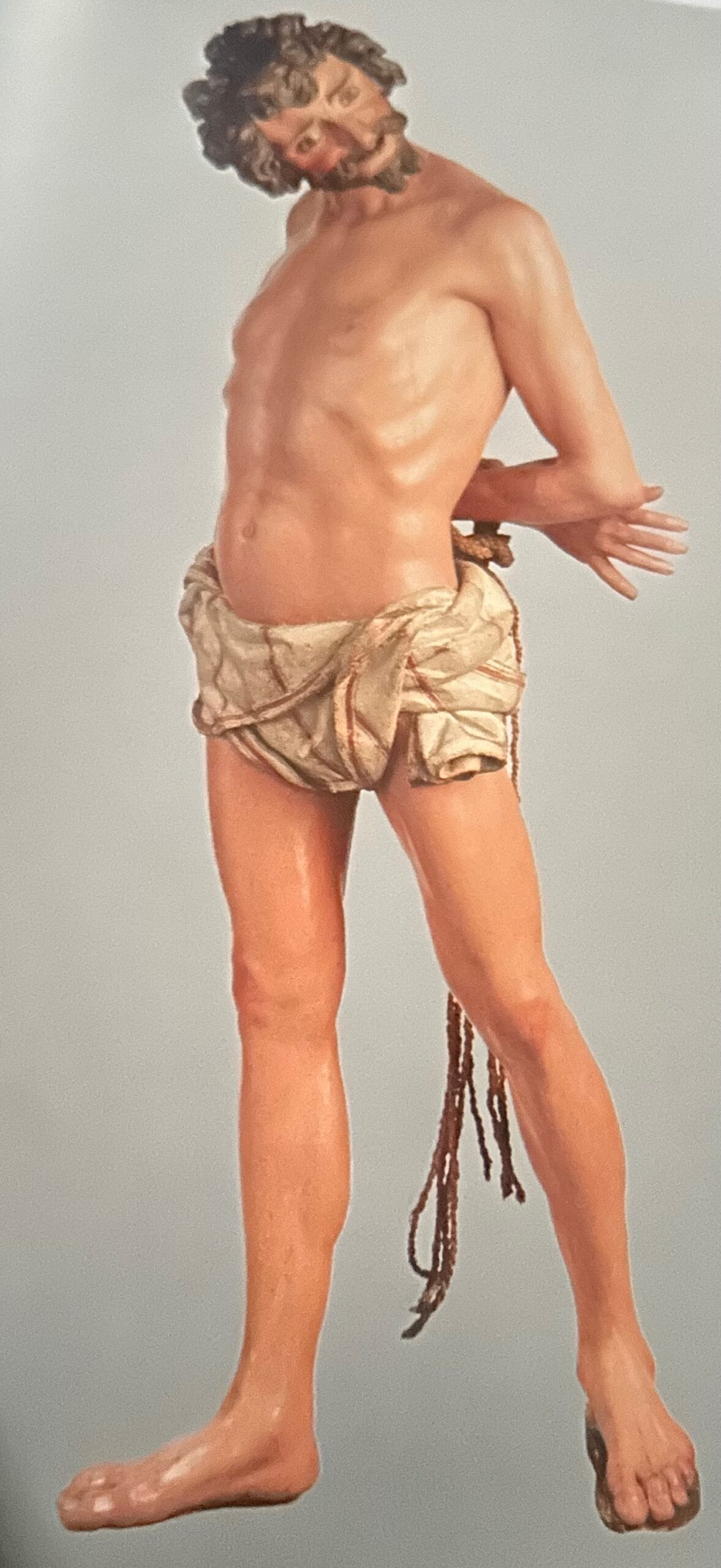
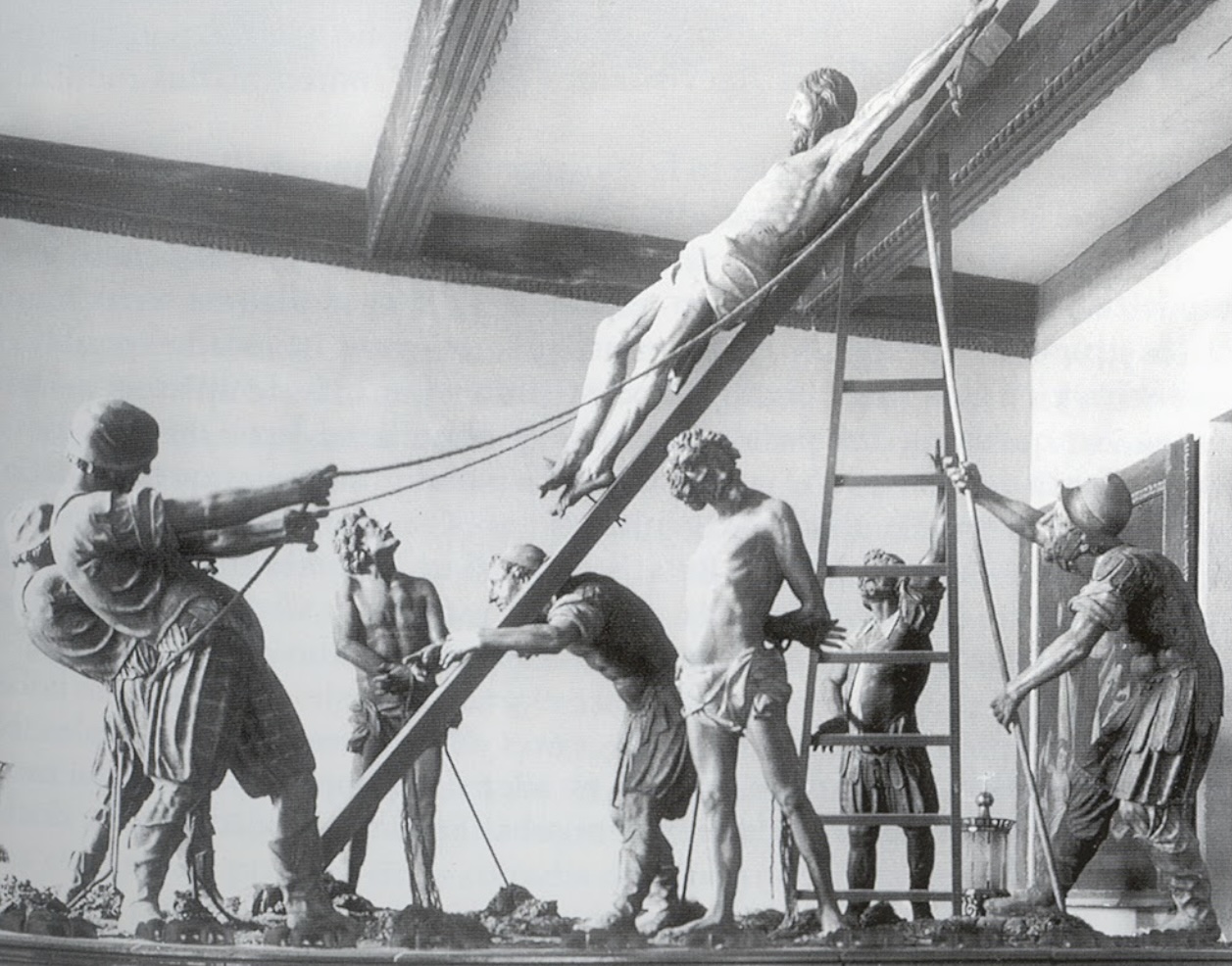
Dismas (top) and Gestas (lower), Mueo Nacional de Escultura, Valladolid, originally from the Paso of the Elevation of the Cross (below), Francisco de Rincón 1604.
These two figures were created as part of a paso or float made to be carried in procession through the streets of Valladolid during Holy Week. The Confraternity of the Holy Passion gave Francisco de Rincón a very detailed commission brief. The figures were to be carved from Segovia pine. It specified their size and composition. The paso was to show the raising of the cross and to have no less than eight life size figures. In the scene to be shown, Jesus has been nailed to the cross which is being raised by five henchmen while the two thieves stand looking on, awaiting their own fate. Rincón’s figures were hollowed out to reduce the weight of the paso and their individual weights were distributed evenly so that the paso could be carried in procession. Up this time such figures were created from much lighter material and were easily damaged. Using wood not only made them stronger, it also allowed a far finer quality of carving and painting. Thanks to this initiative by the confraternity and the sculptor’s skill during two years of work, this paso would prove to be revolutionary, marking a milestone in Baroque processional sculpture that would have a profound impact throughout much of Spain. But what can we say about the two thieves? All four gospels say that Jesus was crucified with two others on either side. Matthew and Mark say that these two were robbers and that both reviled him. Only in Luke do the two condemned men speak. While one of them reviles him, the other comes to faith and salvation. The gospels do not name them. An apocryphal account from the 4th or 5th century names them Dismas and Gestas. Dismas looks towards Jesus on the cross. Everything about the figure is calm and serene as he awaits his ordeal. Gestas looks down towards the crowds watching the procession. The twist of his head and his outstretched fingers suggest tension. To really appreciate this three dimensional work you need to see it as it moves along in procession. I was fortunate enough to see it once, albeit motionless it in a gallery. Actually the figures were separated during the Nineteenth Century confiscation of Church property and it was only in 1993 that it was possible to reassemble them because until then the figure of Jesus was lost. Luis Luna Moreno identified a figure, which had been long venerated as St Dismas, as actually being the figure of Jesus from this paso. St Dismas is venerated by Orthodox Christians and Catholics. He is patron saint of prisoners, repentant thieves and funeral directors. St Dismas pray for us.
The Catholic Chaplaincy serves the students and staff of the University of Edinburgh, Edinburgh Napier University and Queen Margaret University.
The Catholic Chaplaincy is also a parish of the Archdiocese of St Andrews and Edinburgh (the Parish of St Albert the Great) and all Catholic students and staff are automatically members of this parish.


Follow us for news updates and inspiration. Website design by Colour Rich
St Albert's Catholic Chaplaincy is part of the English Province of the Order of Preachers, a charity registered in England and Wales (231192) and in Scotland (SC039062).