
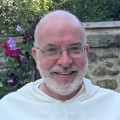
A course by fr. Andrew Brookes OP
St Albert’s Catholic Chaplaincy – Garden Room
23 George Square, Edinburgh, EH8 9LD
Thursday evenings from 24 September 2026
Refreshments from 7:30pm; Talk at 8pm
Catholicism is the way of understanding Jesus, God, human life and how to live well and how to practically and fruitfully live this out, as understood and practiced by the Catholic Church, the most ancient group of Christians, and a group in direct continuity with the historic Jesus, and by far the biggest group of Christians in the world today.
This course explores and explains Catholicism – what Catholics believe, how they worship and pray, how they try to live the moral life with God’s help, and the mission they have received from Jesus to bless the world.
It runs over about 20 sessions covering the overall content of the “Catechism [official teaching book] of the Catholic Church”. Each session comprises of a chance to meet for light refreshments and get to know each other. There is then a talk of around 45 minutes followed by a chance to ask questions and discuss the content. We try to finish with a short time of prayer.
We look at God’s overall plan as Creator and Saviour, the key characteristics of humans, Jesus, and God as Father, Son and Holy Spirit. We then look at the Church, its teaching authority, the sacraments including the Eucharist, and its mission, and its development across history. We look at the future for each person after death and for us all when God fulfils his plan with the return of Jesus in glory, and we also consider the saints in Heaven including Mary. We then look at how we respond to all that God has done for us by our love for God expressed in a moral life. We look at what it means to become like Jesus and the different areas of morality including the promotion of life, truth, justice, care for others and the planet, and how to build healthy relationships with others, integrating our sexuality into them. After looking at the help available in the sacrament of penance (confession) we look at the challenges to keep developing as Catholics and to discover and follow our different vocations.
Part I
24 September 2026: 1. The Gospel of Jesus Christ and conversion; the scope of this course and how to make the most of it.
1 October: 2. God, Creation and the origin of evil.
8 October: 3. Salvation History: a Journey through the Bible.
15 October: 4. Jesus: who he is and what he has done for us.
22 October: 5. The Holy Spirit
29 October: 6. God the Trinity
5 November: 7. The Church – her basic identity, nature and features
12 November: 8. The Teaching Authority of the Church – Scripture, Tradition, Magisterium. The relationship of Faith and understanding.
19 November: 9. Sacraments in General. Baptism and Confirmation in particular.
26 November: no meeting
3 December: 10. The Mass – how to understand it and participate better
Part II
14 January 2027: 11. Eschatology and Evangelisation: the Return of Jesus, the Final Things and the Mission of the Church on Earth.
21 January: 12. The Church Then and Now: a brief history of the Church, and her present situation and challenges.
28 January: 13. The Communion of the Saints: Mary and the saints.
4 February: 14. Moral life: an introduction to the nature and scope of Christian morality.
11 February: 15. The Commands and Moral Teaching of Jesus, the Ten Commandments. Defending life, not killing; truth telling; attitudes to property, money and possessions.
Reading Week Break
25 February: 16. Sexuality and Relationships: Theology of the Body and Marriage.
4 March: 17. Catholic Social Teaching.
11 March: 18. Confession and how to go.
18 March: 19. Christian Holiness, Growth, Guidance and Prayer.
21–28 March: Holy Week
Where possible, the sacraments of initiation (Baptism, Confirmation, Eucharist) are celebrated at the Easter Vigil on the evening of Saturday 27 March.
1 April: 20. Mission and Ministry, Vocation and Perseverance
Part III
Optional “mystagogy” sessions to catch up, ask questions, and look practically at how the Catholic faith and sacramental life is lived. Dates to be determined.
The course begins by inviting participants to renew (or possibly make) a basic commitment to Jesus, but, for the most part, the course is delivered on the basis that participants are already Christians who want to find out about or grow in their knowledge of Catholicism as a way of being Christian. Those who wish to explore the core foundations of Christianity – God, Jesus and what is faith, love and becoming a follower of Jesus – will almost certainly benefit from first doing the “Who is Jesus?” course.
Individual support to help people make decisions about their own spiritual and faith journey will accompany the group sessions.
Talks will be videoed to allow people to catch up on sessions they cannot attend.
To find out more, or for help in deciding if the course is right for you at this time, please contact fr. Andrew or fr. Benjamin.
To enrol, please complete the 2026–2027 registration form for What is Catholicism?
For wider information: www.thekerygmaproject.org
The Catholic Chaplaincy serves the students and staff of the University of Edinburgh, Edinburgh Napier University and Queen Margaret University.
The Catholic Chaplaincy is also a parish of the Archdiocese of St Andrews and Edinburgh (the Parish of St Albert the Great) and all Catholic students and staff are automatically members of this parish.


Follow us for news updates and inspiration. Website design by Colour Rich
St Albert's Catholic Chaplaincy is part of the English Province of the Order of Preachers, a charity registered in England and Wales (231192) and in Scotland (SC039062).